Why does one house on St. Simons Island go from contract to keys in five weeks, while the house two streets over drags for three months with the same asking price range and the same buyer pool? Ask five different portals for the island's average days on market and you'll get five different answers, none of which explain the gap. The answer isn't hiding in the market. It's hiding in a stack of paperwork that most sellers don't think about until a lender asks for it.
The portals are all measuring something different
Pull up four sites and you'll see four numbers that all claim to describe the same island.
Zillow's home value index put St. Simons Island's average home value at $688,772 as of June 30, 2026, with homes going to pending in around 46 days. Redfin's most recent read, covering the three months ending in May 2026, showed a median sale price of $664,000, down 2.9 percent year over year, with homes selling in roughly 45 days on average. Movoto's August 2026 numbers tell a slower story: a median list price of $795,000 and a median 86 days on the market, statistically flat compared to August 2025.
None of these are wrong. They're measuring different slices of the same market.
| Source | What it's counting | Window | Days on market |
|---|---|---|---|
| Zillow | Time to pending | As of June 30, 2026 | ~46 days |
| Redfin | Time to sale, three-month average | Through May 2026 | ~45 days |
| Movoto | Time to sale, island-wide median | August 2026 | ~86 days |
| Active MLS listings, local pull | Homes still sitting unsold | Early August 2026 | ~95 days |
| Closed sales, correctly priced | Homes that actually sold | Early August 2026 | ~35 days |
That last row is the one worth sitting with. A local review of active MLS listings in early August 2026 found single-family inventory averaging 95 days on market, with more than 70 percent of that inventory priced above $850,000. But the homes that actually closed, when priced to the current market from day one, moved in roughly 35 days. The 60-day gap between those two numbers isn't a market problem. It's a readiness problem, and it shows up in three specific documents.
The elevation certificate is a pricing document, not a compliance checkbox
Nobody is legally required to have a current elevation certificate to sell a home on St. Simons Island. But skip it and you hand your buyer's insurance agent a blank spot on the form, and insurers price blank spots as worst-case scenarios.
A Georgia flood insurance report covering 72 real quotes issued between March 2025 and July 14, 2026 found the median Georgia flood insurance quote sat at $530 a year, with most quotes falling between $250 and $700. The counterintuitive part is which flood zone came out ahead. Zone A quotes, the ones without detailed Base Flood Elevation data attached, carried a higher median premium of $786 a year, compared with $584 for Zone AE, the zone that actually comes with mapped elevation data. The uncertainty costs more than the risk itself.
An elevation certificate doesn't guarantee a lower premium. What it does is give the insurer something to underwrite against instead of a guess. On a barrier island where flood zone designations sit right at the property line between neighborhoods like East Beach and inland Sea Palms, that single document is often the difference between a buyer's lender clearing financing in a week and a buyer's lender ordering a fresh survey that adds two or three weeks to the calendar, right in the middle of a 30-day due diligence period.
The termite clock nobody times correctly
Georgia doesn't require a Wood Infestation Report to close, but most lenders still ask for one, and the state's own form, known as Form 100, is only valid for 30 days from the date it's signed. If closing slides past that window, which happens easily when a flood zone issue stalls underwriting, the report has to be reissued.
That's a $50 to $250 cost most buyers shrug off. What actually stalls a deal is what happens if the reissued inspection finds something the first one didn't. Coastal Georgia's humidity means conditions change fast, and if active activity turns up on the second look, the pest control company issuing the report is responsible for treatment before a clearance letter goes out, followed by a new inspection and a new 30-day clock.
Here's the part sellers miss: the flood documentation delay and the termite clock aren't independent problems. They compound. A buyer waiting on an elevation survey is a buyer whose closing date keeps slipping, and every week that closing slips is a week closer to the WDIR expiring and needing to be redone. One slow document makes the second one expensive.
If you're planning to keep the rental income, confirm this before you write an offer
For anyone buying with short-term rental income in mind, Glynn County's short-term rental ordinance, codified in Chapter 2-31 of the county code, requires a certificate before any property can legally rent for fewer than 30 consecutive days. Certificates are managed through the county's OpenGov licensing portal, and operators pay a monthly 7 percent accommodation excise tax on top of state sales and lodging taxes. The county maintains a list of properties with active certificates, updated monthly.
What isn't spelled out anywhere in the ordinance is a guarantee that a certificate transfers automatically to a new owner at closing. If you're buying a property specifically for its existing booking calendar, confirm directly with Glynn County's Licensing and Compliance office what happens to that certificate on transfer of ownership, and build your closing timeline around getting your own application in early rather than assuming day-one continuity. A gap of even a few weeks during peak summer season is real lost income, not a paperwork technicality.
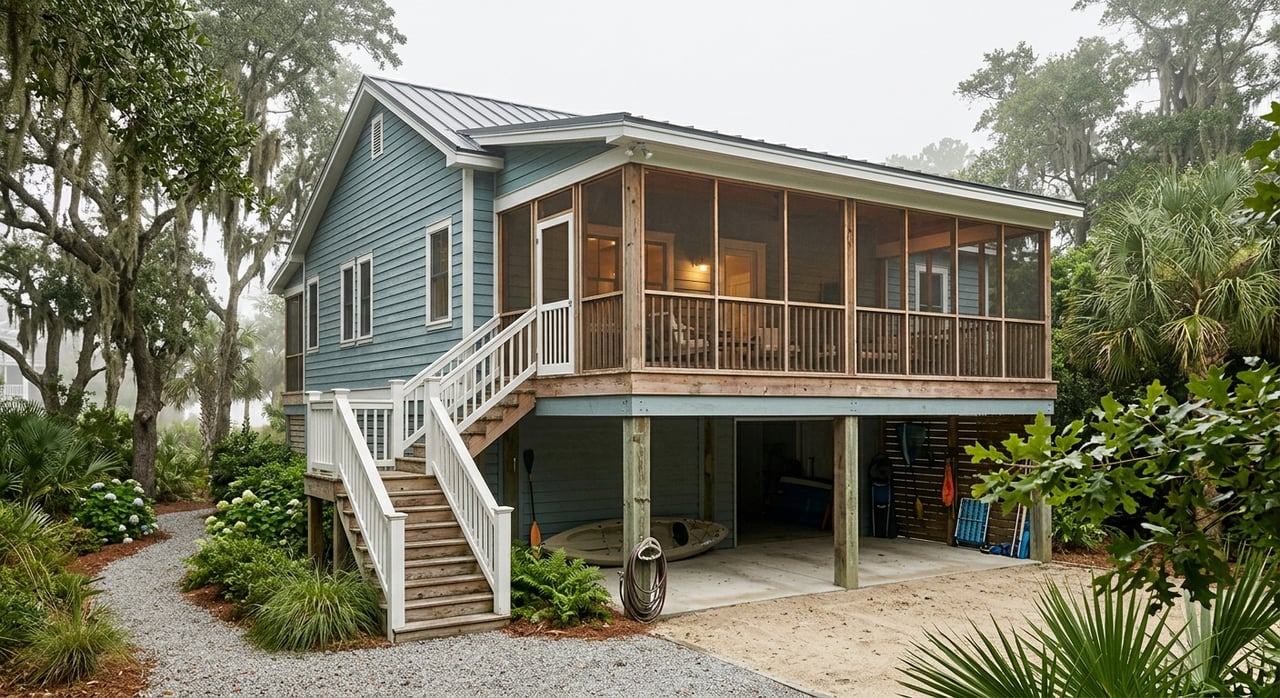
The same logic applies to marsh and deepwater parcels with existing docks. Dock permits are documented separately from the deed, so buyers of waterfront property should confirm the permit is active and understand what transfers with the sale before assuming continued access.
What this means depending on which side of the contract you're on
If you're selling, the fastest path from list to close runs through paperwork you gather before the first showing, not after an offer lands:
- Order a current elevation certificate if your last one predates a FEMA map update or any structural change to the home.
- Get your Wood Infestation Report timed to your expected closing date, not the day you list, since the 30-day clock starts the moment it's signed.
- If the home operates as a short-term rental, gather your current STR certificate and excise tax filing history so a buyer's lender sees clean records.
- For waterfront parcels, pull your dock permit documentation ahead of time rather than waiting for a buyer's attorney to ask.
- Have your current homeowners insurance declarations page ready so a buyer's insurance agent has a real comparison point instead of starting from zero.
If you're buying, the same list works as a due diligence checklist. Ask for these documents specifically, in writing, before your inspection period runs out. A seller who has them ready is telling you something about how the rest of the transaction will go.
Quick answers before you go under contract
Does a Wood Infestation Report expire if my closing date moves? Yes. Georgia's Form 100 is valid for 30 days from signing. If your closing slides past that window, a new inspection is required and the clock restarts.
Is an elevation certificate required by Georgia law to sell my home? No, but insurers use it to rate flood risk accurately. Without one, your buyer may face a higher quote simply because the insurer lacks the data to price the actual risk.
Will a short-term rental certificate transfer automatically when I buy a property in Glynn County? Don't assume it will. Confirm directly with the county's Licensing and Compliance office and plan your own application timeline rather than counting on uninterrupted rental income from closing day.
If you're weighing a purchase or a listing on St. Simons Island and want a clear read on what your specific property will need before it goes under contract, Coastal Georgia Real Estate can walk through the documentation with you now, not after an offer is already on the table. Schedule a free consultation and let's get the timeline right from the start.